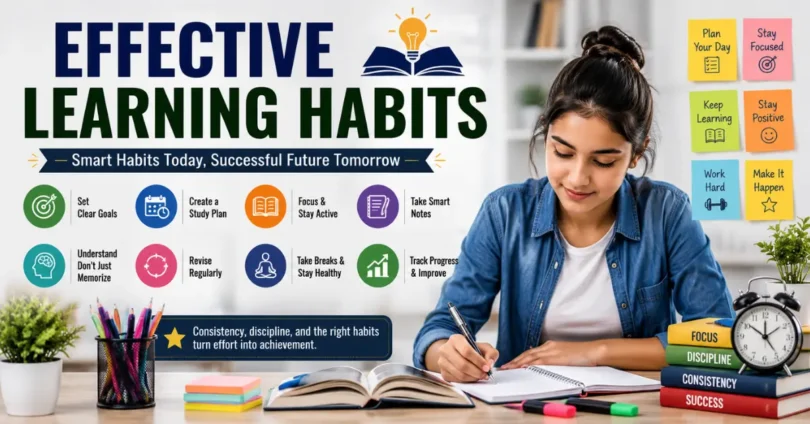
Effective Learning Habits Are the daily actions and study practices that help students learn faster, remember information longer, and achieve better results. Many students spend hours studying but do not see improvement because they lack the right learning habits. Good habits make learning easier, more organized, and less stressful. Whether you are preparing for exams, completing assignments, or learning new skills, developing effective learning habits can improve your focus, productivity, and academic success. In this guide, you will discover step-by-step strategies to build strong learning habits that support long-term growth and better educational outcomes.
Understand Your Learning Goal Before You Start
Before you begin studying, it is important to understand your learning goal. A clear goal gives your study sessions direction and helps you stay focused on what matters most. When students study without a goal, they often waste time and struggle to measure their progress. Start by asking yourself what you want to learn and why it is important. Your goal may be to understand a difficult topic, prepare for an upcoming exam, improve your grades, or develop a new skill.
Knowing your purpose makes learning more meaningful and keeps you motivated. Break large goals into smaller and easier tasks. For example, instead of saying, “I want to learn science,” you can set a goal such as, “I will understand the human digestive system this week.” Small goals are easier to achieve and help build confidence.
Create a Simple Daily Learning Routine
A simple daily learning routine helps students stay organized, manage their time better, and make steady progress in their studies.
- Choose a specific time each day for studying to build consistency.
- Start with the most important or difficult subject when your mind is fresh.
- Create a realistic study schedule that fits your daily activities.
- Divide study time into small sessions to avoid feeling overwhelmed.
- Include short breaks between study periods to maintain concentration.
- Keep all study materials ready before starting your learning session.
- Set small daily goals to track your progress and stay motivated.
- Review previous lessons before learning new topics.
- Limit distractions such as social media, television, or unnecessary notifications.
- End each study session by planning what you will learn next.
A simple daily learning routine creates structure and consistency, making it easier to learn new information, stay focused, and achieve long-term academic success.
Prepare a Distraction Free Study Space
A distraction-free study space helps students focus better, learn faster, and complete their work more efficiently. The right environment can improve concentration and reduce unnecessary interruptions during study time.
- Choose a quiet area where you can study without frequent disturbances.
- Keep your study desk clean and organized to avoid distractions.
- Make sure you have good lighting to reduce eye strain while reading.
- Keep only the materials you need for the current study session.
- Turn off unnecessary notifications on your phone, tablet, or computer.
- Use comfortable seating that supports good posture during long study periods.
- Avoid studying near televisions or other sources of entertainment.
- Keep water nearby so you do not need to leave your study area often.
- Maintain a comfortable room temperature to stay focused.
- Inform family members or roommates when you need uninterrupted study time.
- Remove clutter that may distract your attention from learning.
- Create a study environment that makes you feel calm and motivated.
A well-organized and distraction-free study space helps you stay focused, improve productivity, and make every study session more effective.
Learn One Topic at a Time
Focusing on one topic at a time helps students understand information more clearly and avoid confusion. This learning method improves concentration and allows the brain to process knowledge more effectively.
- Select one topic and give it your full attention before moving to another.
- Break large subjects into smaller sections that are easier to learn.
- Complete the basic concepts before studying advanced information.
- Avoid switching between multiple subjects during the same study session.
- Spend enough time understanding a topic instead of rushing through it.
- Take notes on important points to strengthen your understanding.
- Ask questions whenever a concept is unclear or difficult to understand.
- Use examples and real-life situations to make learning easier.
- Review the topic after studying to confirm that you understand it well.
- Practice related exercises before moving on to the next lesson.
- Focus on quality learning rather than trying to cover too many topics quickly.
- Track your progress to see how much of the topic you have mastered.
Learning one topic at a time improves focus, reduces mental overload, and helps students build a stronger understanding of every subject they study.
Use Active Learning Instead of Passive Reading
Active learning helps students engage with information instead of simply reading it. When you actively participate in the learning process, you understand concepts better, remember them longer, and develop stronger problem-solving skills.
- Ask yourself questions while reading a lesson or chapter.
- Summarize important concepts in your own words after studying.
- Teach the topic to a friend, family member, or even yourself aloud.
- Create simple quizzes to test your understanding of the material.
- Highlight only key information instead of marking entire pages.
- Make mind maps to connect related ideas and concepts.
- Use flashcards to review important terms, definitions, and facts.
- Solve practice questions to apply what you have learned.
- Compare new information with knowledge you already have.
- Write short explanations of difficult topics to improve understanding.
- Participate in group discussions to gain different perspectives.
- Review mistakes and learn why the correct answers are right.
Active learning makes study sessions more engaging and effective, helping students understand concepts deeply and retain information for a longer time.
Practice What You Learn Regularly
Regular practice helps turn knowledge into real understanding. The more you apply what you learn, the easier it becomes to remember information, improve skills, and gain confidence in your abilities.
- Practice new concepts soon after learning them to strengthen memory.
- Complete exercises and assignments related to the topic you studied.
- Use real-life examples to apply knowledge in practical situations.
- Solve different types of questions to improve problem-solving skills.
- Repeat difficult tasks until you can complete them confidently.
- Test yourself regularly to identify areas that need improvement.
- Review mistakes carefully and learn how to avoid them in the future.
- Set aside dedicated practice time in your daily study routine.
- Use worksheets, quizzes, and practice tests for better preparation.
- Challenge yourself with slightly harder tasks as your skills improve.
- Track your practice progress to stay motivated and focused.
- Stay consistent, even if you practice for only a short time each day.
Regular practice strengthens learning, improves confidence, and helps students turn knowledge into lasting skills that can be used effectively in academics and everyday life.
Develop Strong Time Management Skills
Good time management helps students complete tasks efficiently, reduce stress, and create a healthy balance between studying and personal activities. Managing time wisely allows you to achieve more without feeling overwhelmed.
- Create a daily study schedule and follow it consistently.
- Set clear priorities by focusing on the most important tasks first.
- Break large assignments into smaller and manageable steps.
- Set realistic deadlines for each study goal or project.
- Use a planner, calendar, or to-do list to stay organized.
- Avoid procrastination by starting tasks as soon as possible.
- Allocate specific time blocks for studying different subjects.
- Limit time spent on activities that do not support your goals.
- Leave extra time for unexpected tasks or challenges.
- Review your schedule regularly and make improvements when needed.
- Learn to balance study time, relaxation, and personal responsibilities.
- Track how you spend your time to identify areas for improvement.
Strong time management skills help students stay organized, meet deadlines, and make better use of every study session, leading to greater academic success.
Build Positive Learning Discipline
Positive learning discipline helps students stay committed to their educational goals even when motivation is low. Strong discipline creates consistency, encourages responsibility, and supports long-term academic growth.
- Develop healthy habits that support learning and productivity.
- Stay committed to your goals instead of relying only on motivation.
- Complete study tasks before moving on to entertainment activities.
- Maintain a positive attitude when facing difficult subjects.
- Practice self-control when distractions appear during study time.
- Set personal rules that help you stay focused and organized.
- Reward yourself after completing important learning tasks.
- Learn from setbacks instead of giving up after mistakes.
- Stay patient because strong learning habits take time to develop.
- Surround yourself with people who encourage learning and growth.
- Keep reminding yourself of the benefits of education and self-improvement.
Positive learning discipline builds consistency, strengthens responsibility, and helps students achieve their academic goals through steady effort and commitment.
Common FAQs About Effective Learning Habits
Some Faqs of Effective Learning Habits:
How long does it take to build effective learning habits?
The time varies from person to person, but most students begin to notice positive changes after practicing good learning habits consistently for several weeks.
Can learning habits affect confidence in studies?
Yes, effective learning habits help students feel more prepared and organized, which can increase confidence during classes, assignments, and exams.
Why is self-reflection important for effective learning?
Self-reflection helps students evaluate what learning methods work best for them and identify areas that need improvement.
Do effective learning habits help with skill development outside school?
Yes, strong learning habits can improve the ability to learn new skills, adapt to changes, and grow professionally throughout life.
How can students stay interested in learning difficult subjects?
Students can stay engaged by connecting topics to real-life situations, setting personal challenges, and celebrating small achievements.
Is learning more effective when students teach others?
Teaching others encourages deeper understanding because it requires students to explain concepts clearly and organize their knowledge.
Can effective learning habits improve decision-making skills?
Yes, learning habits that encourage analysis, research, and critical thinking can help students make better decisions in academic and everyday situations.
Why is curiosity important for effective learning?
Curiosity motivates students to explore new ideas, ask meaningful questions, and develop a lifelong interest in learning.
Conclusion
Effective learning habits are not built overnight, but they can make a significant difference in a student’s academic journey. By setting clear goals, following a consistent routine, staying organized, practicing regularly, and maintaining discipline, students can learn more efficiently and achieve better results. Strong learning habits also improve confidence, problem-solving abilities, and long-term knowledge retention. The key is to stay patient, remain consistent, and continue improving one step at a time. With the right approach, effective learning habits can lead to greater success in school, future careers, and lifelong personal growth.