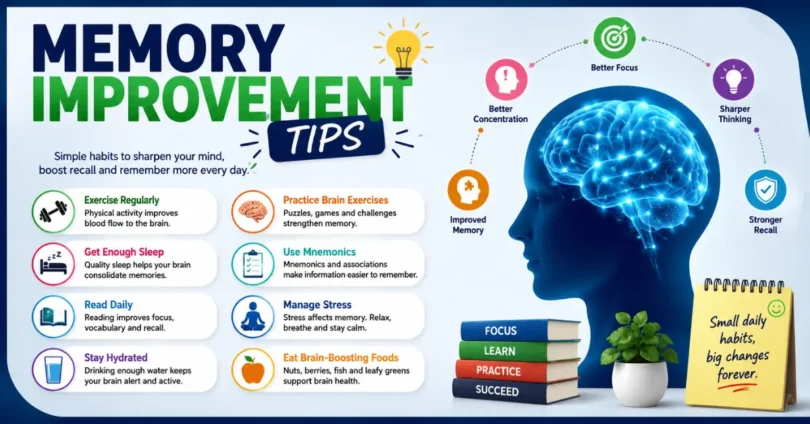
Memory plays an important role in our daily lives. It helps us learn new things, remember important information, and complete everyday tasks. However, many people struggle with forgetting names, losing focus, or finding it difficult to remember what they have studied. The good news is that memory can be improved with the right habits and techniques. You will learn practical Memory Improvement Tips that can help strengthen your brain, improve concentration, and make it easier to remember information. Whether you are a student, a working professional, or simply looking to keep your mind sharp, these tips can help you build better memory skills over time.
How the Brain Stores Information
The brain works like a powerful storage system that collects, organizes, and saves information every day. Whenever you see, hear, read, or experience something new, your brain processes that information and decides whether it is important enough to remember. The process usually starts with short-term memory, which temporarily holds information for a short period. For example, when you hear a phone number and remember it for a few minutes, your short-term memory is at work.
If you pay attention to the information and use it repeatedly, the brain moves it into long-term memory, where it can be stored for months or even years.The brain stores memories through connections between nerve cells called neurons. Every time you learn something new, these connections become stronger. The more often you review or practice information, the easier it becomes for your brain to find and recall it later.
Check Your Current Memory Habits
Before improving your memory, it is important to understand your current habits. A simple self-check can help you identify what is helping or hurting your memory performance.
- Notice how often you forget names, dates, or important information.
- Check if you frequently lose personal items such as keys or phones.
- Observe whether you have difficulty remembering recent conversations.
- Think about how well you stay focused while studying or working.
- Review your daily sleep schedule and sleep quality.
- Evaluate how much time you spend on social media and digital devices.
- Check if you regularly write notes, reminders, or to-do lists.
- Consider how often you review information after learning it.
- Notice whether you get distracted easily during important tasks.
- Examine your eating and hydration habits throughout the day.
- Check if stress or anxiety often affects your concentration.
- Evaluate how much physical activity you get each week.
- Think about whether you rely too heavily on technology to remember things.
- Observe how often you challenge your brain with reading, puzzles, or learning.
- Identify any habits that may be weakening your focus and memory.
Checking your current memory habits helps you understand your strengths and weaknesses. Once you know where improvements are needed, you can take the right steps to build a stronger and more reliable memory.
Create a Brain-Friendly Daily Routine
A well-planned daily routine helps your brain stay active, organized, and ready to learn. Small daily habits can make a big difference in improving memory and mental performance.
- Wake up and go to bed at the same time each day.
- Start your morning with a healthy breakfast to fuel your brain.
- Drink enough water throughout the day to stay hydrated.
- Create a daily schedule for study, work, and relaxation.
- Set clear goals for the most important tasks of the day.
- Take short breaks between study or work sessions.
- Keep your workspace clean and free from distractions.
- Spend time reading to keep your brain active.
- Include physical exercise in your daily routine.
- Practice memory-building activities such as puzzles or quizzes.
- Limit unnecessary screen time and social media use.
- Review important information before ending the day.
- Make time for hobbies that challenge your thinking skills.
- Spend a few minutes relaxing to reduce stress levels.
- Get enough sleep to help your brain process and store memories.
A brain-friendly daily routine creates the right environment for better focus, learning, and memory.
Improve Focus Before Trying to Memorize
Good memory starts with good focus. If your attention is divided, your brain cannot properly process information, making it much harder to remember later.
- Choose a quiet and distraction-free place for studying or learning.
- Turn off unnecessary notifications on your phone and computer.
- Focus on one task at a time instead of multitasking.
- Set a clear goal before starting any study or work session.
- Use short study periods with regular breaks to stay attentive.
- Remove clutter from your workspace to reduce distractions.
- Practice active listening during conversations and lessons.
- Read information carefully instead of rushing through it.
- Take notes to keep your mind engaged with the material.
- Use deep breathing exercises to improve concentration.
- Avoid checking social media while studying or working.
- Stay hydrated, as dehydration can reduce focus.
- Get enough sleep to maintain strong attention levels.
- Exercise regularly to improve mental alertness.
- Train your brain with mindfulness activities that strengthen concentration.
Strong focus helps your brain absorb information more effectively. When you improve your concentration first, memorizing and recalling information becomes much easier and more successful.
Train Your Brain with Memory Exercises
Just like muscles become stronger through exercise, your brain can also improve through regular memory training. Simple mental activities can help boost memory, focus, and thinking skills over time.
- Solve crossword puzzles to challenge your memory and vocabulary.
- Play memory matching games to improve recall abilities.
- Read books regularly and summarize what you have learned.
- Learn a new skill to create fresh brain connections.
- Practice remembering shopping lists without writing them down.
- Try mental math exercises instead of always using a calculator.
- Memorize short poems, quotes, or important facts.
- Play strategy games that require planning and problem-solving.
- Test yourself on information you learned earlier in the day.
- Use visualization techniques to remember names and details.
- Learn a few new words every day and use them in sentences.
- Practice recalling events from your day in the correct order.
- Engage in brain-training apps and educational challenges.
- Participate in discussions that encourage critical thinking.
- Make memory exercises a regular part of your daily routine.
Memory exercises help keep your brain active and strengthen its ability to store and recall information.
Manage Stress to Protect Brain Function
Stress can have a powerful effect on memory, focus, and overall brain performance. Learning how to manage stress can help protect your brain and improve your ability to think clearly.
- Identify the main sources of stress in your daily life.
- Create a realistic schedule to avoid feeling overwhelmed.
- Practice deep breathing exercises when stress levels rise.
- Take short breaks during busy work or study sessions.
- Spend time outdoors to refresh your mind.
- Get enough sleep to help your brain recover from stress.
- Exercise regularly to reduce mental tension and improve mood.
- Listen to calming music to relax your mind.
- Talk to trusted friends or family members about your concerns.
- Avoid negative thinking patterns whenever possible.
- Limit exposure to unnecessary stress from social media and news.
- Practice gratitude by focusing on positive aspects of life.
- Set healthy boundaries between work, study, and personal time.
- Use relaxation techniques such as meditation or mindfulness.
- Make time for hobbies and activities that bring you joy.
Managing stress is essential for maintaining healthy brain function and strong memory.
Technology Tools That Can Help Memory
Modern technology can make it easier to remember important information and stay organized. When used wisely, digital tools can support memory improvement and daily productivity.
- Use reminder apps to keep track of important tasks and deadlines.
- Set calendar alerts for meetings, events, and appointments.
- Create digital to-do lists to stay organized throughout the day.
- Use note-taking apps to save important ideas and information.
- Record voice notes when you need to remember something quickly.
- Use flashcard apps to review and memorize new information.
- Store important documents in cloud storage for easy access.
- Use habit-tracking apps to build consistent memory-improving routines.
- Set recurring reminders for daily responsibilities and goals.
- Use educational apps that offer memory and brain-training exercises.
- Organize files and notes into clearly labeled folders.
- Use bookmarking tools to save useful articles and resources.
- Sync your devices so information is available everywhere.
- Review digital notes regularly to strengthen long-term memory.
- Avoid depending completely on technology and continue exercising your natural memory.
Technology can be a valuable tool for improving memory when used correctly. By combining digital tools with healthy memory habits, you can stay organized, learn more effectively.
Build a Long-Term Memory Improvement Plan
Improving memory is not a one-time task. A long-term plan helps you develop consistent habits that strengthen memory and support lifelong brain health.
- Set clear and realistic memory improvement goals.
- Identify the areas where you want to improve your memory.
- Create a daily routine that supports learning and recall.
- Schedule regular study and review sessions.
- Practice memory exercises several times each week.
- Track your progress in a journal or notebook.
- Focus on one improvement habit at a time.
- Use repetition techniques to strengthen long-term memory.
- Maintain healthy sleep habits every night.
- Follow a balanced diet that supports brain function.
- Stay physically active to improve blood flow to the brain.
- Reduce distractions that interfere with learning.
- Make reading and continuous learning part of your lifestyle.
- Review your goals regularly and adjust them when needed.
- Stay patient and consistent, as memory improvement takes time.
A long-term memory improvement plan helps turn good habits into lasting results. With consistent effort and healthy routines, you can strengthen your memory.
Common FAQs About Memory Improvement Tips
Some Faqs of Memory Improvement Tips:
How long does it take to see results from memory improvement tips?
The time varies from person to person. Some people notice better focus and recall within a few weeks, while long-term improvements may take several months of consistent practice.
Can learning a new language improve memory?
Yes. Learning a new language challenges the brain to remember vocabulary, grammar, and pronunciation, which can strengthen memory and cognitive skills.
Does writing information by hand help memory?
Many studies suggest that handwriting helps the brain process information more deeply than typing, making it easier to remember important details later.
Can music help improve memory while studying?
Soft instrumental music may help some people stay focused and relaxed. However, the effect depends on personal preference and the type of task being performed.
Is memory improvement possible at any age?
Yes. The brain can continue learning and adapting throughout life. Regular mental activity and healthy habits can help improve memory at almost any age.
Can social interaction support better memory?
Yes. Meaningful conversations and social activities keep the brain active, improve communication skills, and encourage mental engagement.
Why do some memories stay longer than others?
Information connected to strong emotions, personal experiences, or repeated exposure is often stored more deeply and remembered for a longer time.
What is the best way to stay motivated during memory training?
Set small goals, celebrate progress, and focus on gradual improvement. Consistency is often more important than trying to improve too much at once.
Conclusion
Improving your memory is a journey that requires patience, consistency, and the right habits. Small daily actions, such as staying focused, following a healthy routine, managing stress, exercising your brain, and using effective learning strategies, can lead to significant improvements over time. The key is to make memory-building activities a regular part of your lifestyle rather than looking for quick fixes.