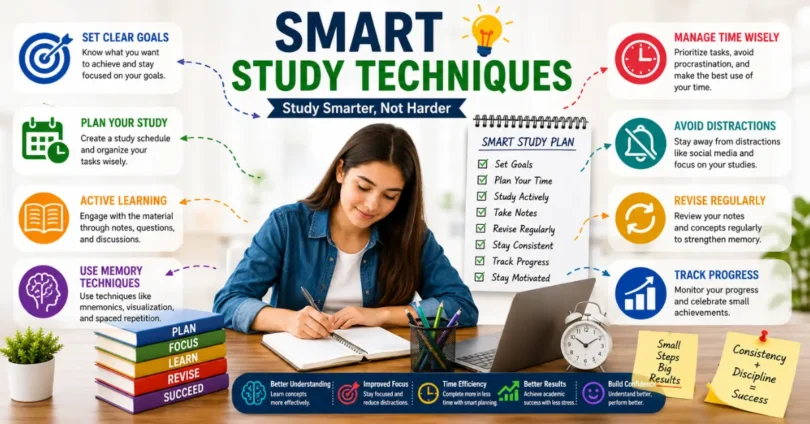
Many students spend long hours studying but still struggle to remember what they learn. This often happens because they focus on studying harder instead of studying smarter. Smart Study Techniques are simple methods that help students learn more effectively, improve concentration, and remember information for a longer time. These techniques make learning easier, reduce stress, and help students achieve better results in exams and daily studies. By using the right study strategies, students can save time, stay motivated, and build stronger academic skills. In this guide, you will learn practical and easy-to-follow smart study techniques that can help you become a more successful learner.
Understand Your Learning Goal Before You Start
Before opening a book or starting a lesson, it is important to know what you want to achieve. A clear learning goal gives your study session a purpose and helps you stay focused. When students study without a goal, they often waste time and feel confused about what to learn. Start by choosing one specific topic or chapter. Then set a simple target, such as understanding a concept, completing an assignment, or preparing for a quiz. Small and realistic goals are easier to achieve and help build confidence.
For example, instead of saying, “I will study science today,” you can say, “I will learn the parts of a plant and their functions.” Having a learning goal also helps you track your progress. At the end of your study session, you can check whether you achieved your target or need more practice. This simple habit makes studying more organized, productive, and effective.
Create a Simple Study Plan That Works
A good study plan helps students stay organized, manage time wisely, and complete learning goals without feeling overwhelmed. A simple and realistic plan makes studying easier and more productive.
- Identify all the subjects or topics you need to study.
- List your most important tasks and learning goals.
- Divide large topics into smaller and manageable sections.
- Assign specific time slots for each subject.
- Study difficult subjects when your energy is highest.
- Keep short breaks between study sessions to maintain focus.
- Leave extra time for revision and practice.
- Use a planner, notebook, or digital calendar to track tasks.
- Avoid overloading your schedule with too many topics in one day.
- Review your study plan regularly and make improvements when needed.
A simple study plan creates structure, reduces stress, and helps students use their time effectively while achieving better learning results.
Prepare a Distraction-Free Study Space
A distraction-free study space helps students concentrate better, complete tasks faster, and improve learning efficiency. A clean and organized environment makes it easier to stay focused on study goals.
- Choose a quiet area where interruptions are minimal.
- Keep your study desk clean and free from unnecessary items.
- Make sure there is enough lighting to read and write comfortably.
- Sit in a comfortable chair that supports good posture.
- Keep all study materials within easy reach before starting.
- Turn off unnecessary notifications on phones and devices.
- Avoid studying near a television or other sources of noise.
- Use headphones or soft background sounds if they help you focus.
- Keep water and essential supplies nearby to avoid frequent breaks.
- Maintain a consistent study location to build a productive habit.
A well-prepared study space reduces distractions, improves concentration, and helps students learn more effectively during every study session.
Use Active Learning Instead of Passive Reading
Active learning helps students understand and remember information better than simply reading pages repeatedly. When students actively engage with the material, learning becomes more effective and enjoyable.
- Ask questions about the topic while studying.
- Summarize important concepts in your own words.
- Teach the lesson to a friend, sibling, or even yourself.
- Create mind maps to connect related ideas.
- Use flashcards to test your knowledge regularly.
- Solve practice questions after learning a topic.
- Discuss concepts with classmates or study groups.
- Take short quizzes to check your understanding.
- Relate new information to real-life examples.
- Focus on understanding ideas instead of memorizing every word.
Active learning improves understanding, strengthens memory, and helps students become more confident and successful learners.
Learn With the Smart Note-Taking Method
Smart note-taking helps students organize information clearly, understand lessons faster, and make revision easier before exams. Good notes save time and improve learning efficiency.
- Write key points instead of copying entire paragraphs.
- Use simple words and short sentences in your notes.
- Organize information with headings and subheadings.
- Highlight important facts, formulas, and definitions.
- Use bullet points to make notes easy to read.
- Create diagrams, charts, or mind maps for complex topics.
- Leave some space for adding extra information later.
- Use different symbols or abbreviations to save time.
- Review and update your notes after each study session.
- Keep notes neat and organized for quick revision.
Smart note-taking improves understanding, makes revision easier, and helps students remember important information more effectively.
Apply Memory Techniques for Better Recall
Memory techniques help students remember information more easily and recall it when needed. Using the right methods can improve learning speed and reduce the chances of forgetting important concepts.
- Break large information into smaller chunks for easier learning.
- Use visual images to connect ideas and facts.
- Create simple acronyms to remember lists and sequences.
- Associate new information with something you already know.
- Repeat important concepts at regular intervals.
- Use flashcards to strengthen memory through self-testing.
- Read information aloud to improve retention.
- Turn facts into short stories to make them more memorable.
- Practice recalling information without looking at your notes.
- Review key topics before sleeping to reinforce learning.
Memory techniques make learning more effective, improve information retention, and help students recall important knowledge with greater confidence.
Use Technology to Study More Efficiently
Technology can make learning faster, easier, and more interactive when used wisely. The right digital tools help students stay organized, access learning resources, and improve study performance.
- Ways to Use Technology for More Efficient Studying
- Use educational apps to learn new concepts and skills.
- Watch instructional videos to understand difficult topics.
- Create digital flashcards for quick revision sessions.
- Use online quizzes to test your knowledge regularly.
- Store study notes in cloud-based platforms for easy access.
- Set reminders and study schedules using productivity apps.
- Use e-books and digital libraries to access learning materials.
- Join online study groups for collaboration and discussion.
- Track your learning progress with study management tools.
- Limit non-educational screen time to avoid distractions.
When used correctly, technology improves learning efficiency, saves time, and provides students with valuable tools for academic success.
Improve Focus With Smart Time Management
Smart time management helps students stay focused, complete tasks on schedule, and avoid unnecessary stress. Managing study time properly increases productivity and improves learning outcomes.
- Set a specific study time each day to build consistency.
- Divide study sessions into smaller time blocks.
- Focus on one subject or task at a time.
- Prioritize important topics before less important ones.
- Use short breaks to refresh your mind and maintain concentration.
- Create daily and weekly study schedules.
- Avoid procrastination by starting tasks early.
- Set deadlines for completing study goals.
- Limit distractions during planned study periods.
- Track how you spend your time and make improvements when needed.
Smart time management helps students stay focused, use their study hours wisely, and achieve better academic results with less stress.
Build Strong Study Habits for Long-Term Success
Strong study habits help students stay consistent, improve learning over time, and achieve long-term academic success. Good habits make studying a natural part of daily life rather than a difficult task.
- Study at the same time each day to create a routine.
- Set clear and realistic learning goals for every week.
- Complete assignments and tasks on time.
- Stay committed to your study schedule even when motivation is low.
- Develop a positive attitude toward learning and self-improvement.
- Keep all study materials organized and easy to access.
- Practice self-discipline by avoiding unnecessary distractions.
- Celebrate small achievements to stay motivated.
- Learn from mistakes and use them as opportunities to grow.
- Maintain a healthy balance between study, rest, and personal activities.
Strong study habits create consistency, improve academic performance, and help students achieve lasting success throughout their educational journey.
Benefits of Using Smart Study Techniques
Smart study techniques help students learn more effectively, improve academic performance, and make studying less stressful. These methods allow learners to achieve better results without spending unnecessary hours on their studies.
- Improve understanding of difficult subjects and concepts.
- Help students remember information for a longer period.
- Increase focus and concentration during study sessions.
- Save time by making learning more efficient.
- Reduce exam stress through better preparation.
- Encourage active participation in the learning process.
- Improve problem-solving and critical-thinking skills.
- Build confidence in academic abilities.
- Support consistent progress toward learning goals.
- Create a more enjoyable and productive study experience.
Smart study techniques provide lasting benefits by improving learning efficiency, boosting confidence, and helping students achieve greater academic success.
Common FAQs About Smart Study Techniques
Some Faqs of Smart Study Techniques:
How long does it take to see results from smart study techniques?
Most students notice improvements in focus, understanding, and productivity within a few weeks of consistently applying smart study methods.
Can smart study techniques help students with poor grades?
Yes, smart study techniques can help students identify learning gaps, improve study efficiency, and gradually achieve better academic performance.
Are smart study techniques useful for practical subjects?
Absolutely. These techniques can improve learning in practical subjects by encouraging hands-on practice, observation, and regular skill development.
Do smart study techniques work for self-learners?
Yes, self-learners can benefit greatly because these methods encourage independence, better organization, and effective knowledge retention.
How can students stay motivated while using smart study techniques?
Students can stay motivated by setting meaningful goals, tracking achievements, and rewarding themselves after completing important study tasks.
Can smart study techniques improve learning speed?
Yes, effective study methods reduce wasted effort and help students process, understand, and apply information more quickly.
Are smart study techniques suitable for group study sessions?
Yes, many smart study strategies work well in group settings by promoting discussion, collaboration, and shared problem-solving activities.
What is the biggest advantage of smart study techniques?
The biggest advantage is that students learn more effectively while using less time and energy, leading to better long-term academic growth.
Conclusion
Smart Study Techniques help students learn more effectively by improving focus, organization, memory, and productivity. Instead of spending countless hours studying without a clear direction, students can achieve better results by using proven methods that make learning easier and more efficient. From setting clear goals and creating study plans to using active learning, memory strategies, and technology, each technique plays an important role in academic success.